
4J Studios Charts Its Own Path Beyond Minecraft with Manic Mechanics and a New Vision
4J Studios and Manic Mechanics redefine couch co-op gaming, evolving beyond Minecraft with innovative multiplayer experiences.
For a solid decade, 4J Studios was synonymous with one thing and one thing only: bringing the blocky phenomenon of Minecraft to consoles worldwide. The Scottish studio, founded in 2005, became the guardian of the couch co-op experience for a generation of gamers. But as we step into 2025, the walls of their Dundee office, while still adorned with Minecraft memorabilia and awards, tell a story of evolution. The team, once laser-focused on porting the world's biggest game, is now hard at work porting their own creation—Manic Mechanics—to PlayStation, Xbox, and PC, signaling a bold new chapter.
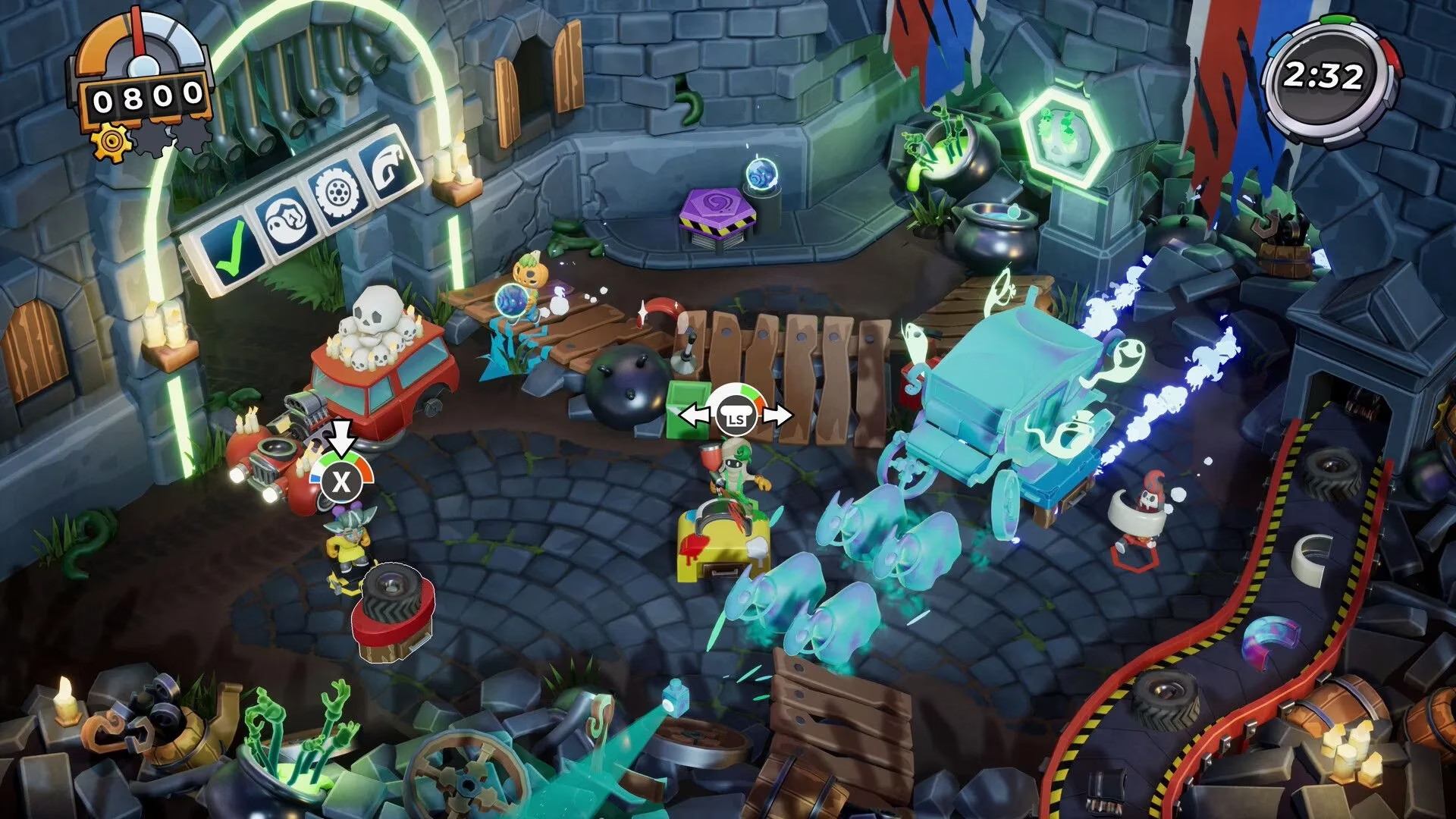
After parting ways with Mojang, the studio's leadership deliberately gave the team room to breathe and create. "When we started [moving] ourselves from Minecraft into what comes next, we just said, 'Guys, go and have some fun. We honestly don't really care if nothing comes out of this, it's fine,'" recalls 4J chairperson Chris van der Kuyl. That creative freedom paid off, sparking a game jam that yielded several prototypes. The winner was Manic Mechanics, a frantic, local multiplayer game where players race against the clock to repair wacky vehicles. It was a deliberate pivot to something smaller in scope but huge in heart.
Why Couch Co-Op? It's in Their DNA
The choice of genre was no accident. 4J has a profound, almost nostalgic, connection to shared-screen gaming. "We've all got a bit of a soft spot for couch co-op," van der Kuyl explains. "The idea that there's a big screen and friends come round... You want games like Jackbox." This philosophy was baked into their Minecraft work from the start. Van der Kuyl recounts pushing for split-screen multiplayer on consoles, with initial skepticism from Mojang: "They’re like, 'Why would you do that?' We’re like, 'Believe me, people are going to love it.'" That legacy now fuels Manic Mechanics.
The Minecraft Shadow and Future Horizons
Despite moving on, the Minecraft experience is an indelible part of 4J's identity and continues to guide its future. "Minecraft is probably not our last foray into sandbox gaming," van der Kuyl reveals, acknowledging the audience that expects more from them in that space. However, he is quick to dismiss any notion of creating a direct competitor. "We've got way too much respect for the Mojang team to ever suggest we could do a rival to Minecraft. Because Minecraft is Minecraft after all... So nothing is going to rival that."
So, what's next? The hints are intriguing. Van der Kuyl teases, "There’s going to be interesting stuff from us before too long... it's probably going to be a game that will grow and it might have small projects within the game." This suggests a live-service or platform-style game, a natural evolution from their years of managing Minecraft's continuous updates.
A 'Palate Cleanser' with Purpose
For the developers, Manic Mechanics served as a necessary creative reset. "The team wanted a palate cleanser," says Creative Director Brian Gomez. Even during the peak Minecraft years, the studio held internal game jams to foster new ideas. Senior Gameplay Designer Thomas Fyfe adds, "Coming off the back of Minecraft, a lot of our designers worked on minigames and party games. We utilised our skill sets and tried something new."
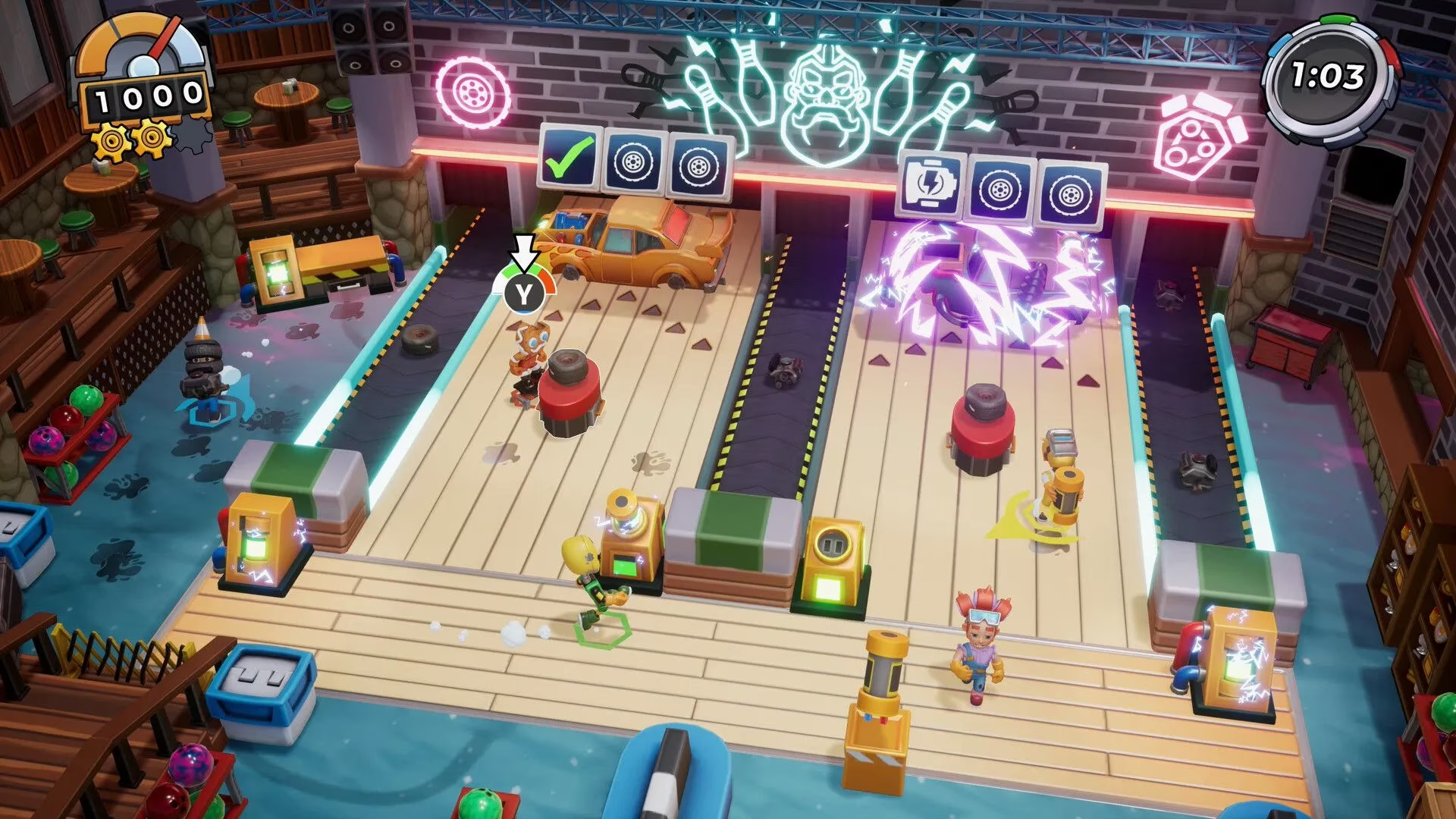
This sentiment resonates across the wider 4J family. Frank Arnot, founder of sister studio Stormcloud, echoes the desire to avoid the AAA grind: "I don't really want to work on a triple-A... I hope that there’s a space for people in between the triple-A games that want to play smaller, more creative titles." For these studios, competing isn't about budget—it's about creativity. "They'll probably spend more on coffee than we’ll spend on a whole budget," Arnot notes wryly. "We need to compete on imagination, creativity, and taking risks."
Optimism in an Unpredictable Industry
In a gaming landscape often dominated by headlines about layoffs and ballooning budgets, van der Kuyl's outlook is refreshingly optimistic. He reflects on the studio's pre-Minecraft days, porting major titles like Oblivion, and wondering if that was all there was. "And then suddenly, out of nowhere comes Minecraft. It's one guy, [he] gets it out there and it's a bit broken and rubbish. And then people go, 'I really like it.' So there is a different way."
He sees the same potential for disruption today. "Nobody knows what's going to be huge next. Nobody saw Palworld coming a few weeks ago," he says, referencing the 2024 smash hit. The lesson for 4J is clear: "So for us, it’s like, don't follow trends, don’t have expectations. Just do a game that you want to make. And be able to afford it."
| 4J Studios: Then vs. Now | |
|---|---|
| THEN (2010s) | NOW (2025) |
| Sole focus: Minecraft console editions | Focus: Original IP (Manic Mechanics) & new projects |
| Defined by a major licensed IP | Carving out an independent creative identity |
| Large-scale porting and updates | Smaller-scale, inventive co-op and party games |
| Working within an established universe | Exploring new genres with a sandbox future hinted |
Ultimately, van der Kuyl's philosophy boils down to a simple truth that cuts through industry noise: "What people want is really great games, and they’ll always want really great games." For 4J Studios, the path forward is about harnessing the lessons from its Minecraft decade—the understanding of community, the love for shared play, and the privilege of nurturing a global phenomenon—to build its own legacy. They're not looking for the next Minecraft; they're busy creating the first 4J Studios original era. And that, by all accounts, is where the real fun begins. :video_game: :hammer_and_wrench:
Leave a Comment
Comments