
Cube Life: Island Survival – The Wii U’s Boldest Minecraft Clone Lives On in 2026
Cube Life: Island Survival brought blocky survival to the Wii U with janky charm, earning a cult following long after Minecraft's absence.
By 2026, most gamers have long since packed their Wii U consoles into dusty attics, right next to their Virtual Boys and HD-DVD players. Yet, somewhere in a dimly lit room, a lone enthusiast boots up a forgotten digital relic: Cube Life: Island Survival. For those who missed this gem, it was the brave little block-builder that dared to ask, “What if Minecraft, but on Wii U and … slightly off?” The answer, it turns out, is a cocktail of earnest imitation, janky charm, and a legacy that has aged like a fine pixelated wine—or perhaps like milk left in the sun, depending on your tolerance for knockoffs.
Back in the mid-2010s, Wii U owners were a desperate bunch. Every Direct brought fresh hope, only to be dashed by another Mario Party or a port of a three-year-old indie game. The console was a beautiful disaster, and its library had a gaping, block-shaped hole where Minecraft should have been. For reasons known only to the corporate gods, Mojang’s phenomenon never made the jump to Nintendo’s dual-screen experiment. Enter Cypronia, a small developer with a dream: to give the people what they wanted, even if that meant wading into legally murky waters.
The debut trailer for Cube Life: Island Survival was a masterclass in unapologetic cloning. Blocky trees? Check. Square clouds drifting across a cubist sky? Check. A hotbar full of tools that looked suspiciously familiar? Oh, absolutely. The graphics had that same retro-meets-playdough aesthetic, though somehow the animations felt like an intern had been given a strict deadline and a single cup of coffee. The sound design was a symphony of generic thwacks and crunches, as if every block was being broken with a wet noodle. Yet, buried beneath the layers of imitation, there was something weirdly endearing about the whole affair.
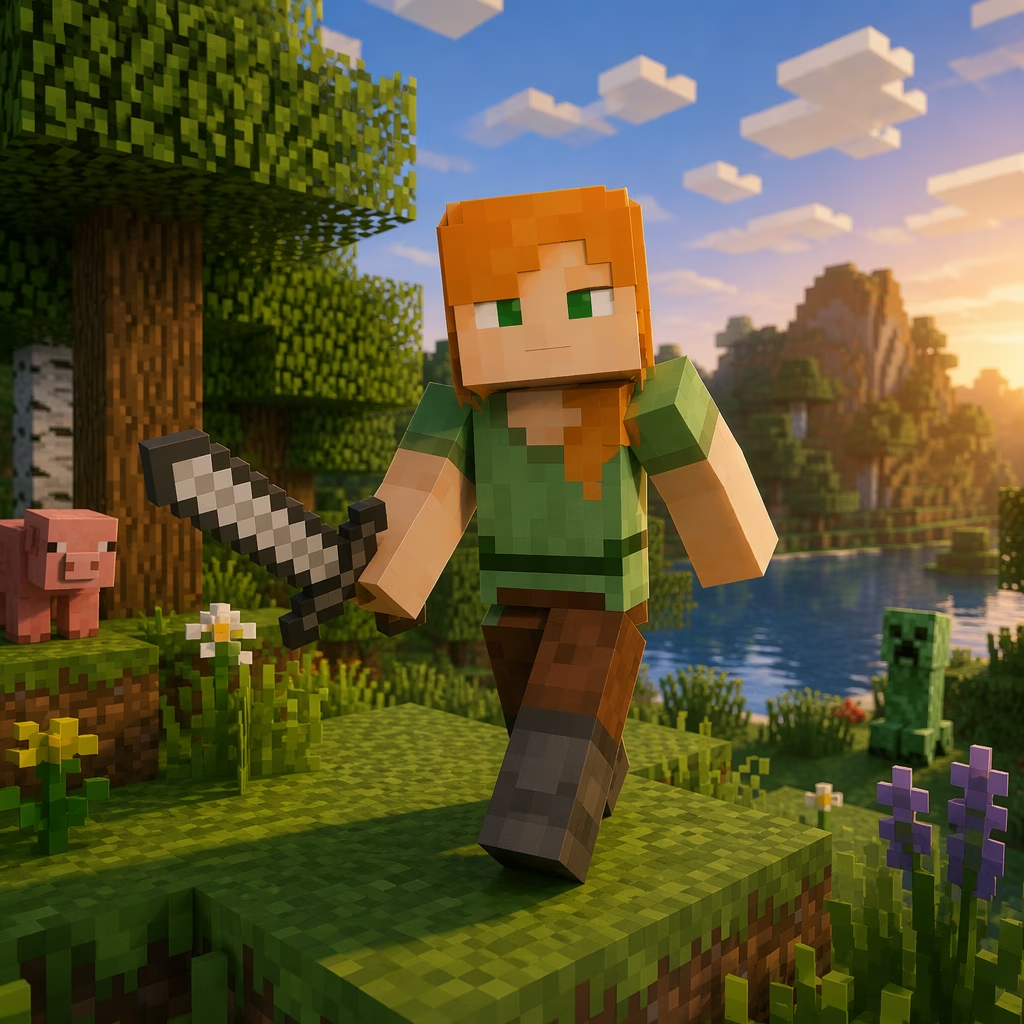
The game launched in 2015 to a collective shrug from the gaming press, but for a specific subset of Wii U faithful, it was a revelation. Finally, they could punch trees, build shoddy shelters, and fend off blocky zombies—all while using the GamePad as a clunky map. The survival mode was punishing in ways that felt unintentional, with enemies spawning directly inside your lovingly crafted hut because the AI had the spatial awareness of a concussed sloth. Creative mode offered a blank canvas, albeit one limited by the Wii U’s hardware, which wheezed like an asthmatic gorilla whenever too many blocks appeared on screen.
Cypronia, to their credit, leaned into the comparisons with a brazenness that bordered on performance art. They never claimed to be reinventing the wheel; they just wanted to build a slightly lopsided wheel that fit a Nintendo-shaped axle. By 2026, this approach has earned Cube Life a bizarre cult status. The game’s physical copies now trade hands on niche forums for sums that could buy you a decent sandwich. Digital copies, locked inside the now-defunct Wii U eShop, are treasured assets on surviving consoles, spoken of in hushed tones like a family heirloom.
What makes Cube Life’s post-mortem so fascinating is not the game itself, but what it represents: a snapshot of an era when platform exclusivity wars left serious gaps, and indie developers swooped in with duct tape and optimism. In 2026, we live in a world where Minecraft is on everything—smart fridges, Teslas, probably your toaster. The idea of a console missing out on such a title feels quaint, like hearing about a town without electricity. Cube Life was a product of its time, a scrappy underdog that emerged from the shadows of Nintendo’s most misunderstood console.
Of course, not everyone looks back fondly. Some argue the game was an unabashed cash grab, a hollow shell that barely functioned as a game. The multiplayer mode often devolved into a slideshow, and the "dynamic weather system" mostly just meant the screen turned a slightly different shade of beige. But in the grand tradition of B-movies and cover bands, there’s an audience that finds joy exactly in those imperfections. In 2025, a Twitch streamer famously completed a 24-hour challenge in Cube Life, discovering four new glitchy ways to fall through the world and declaring it “the most authentic survival experience since homelessness.”
The legacy of Cube Life: Island Survival in 2026 is a cautionary tale and a celebration rolled into one. It reminds us that for every genre-defining masterpiece, there’s a parade of inspired copycats, some of which stumble into brilliance entirely by accident. The game will never be remembered as a classic, but it has earned a permanent footnote in the Book of Gaming Oddities. As the last functional Wii U consoles gasp their final breaths, a small but dedicated community keeps Cube Life alive through emulation and sheer nostalgia, proving that even the strangest knockoff can find its moment in the sun—even if that sun is just a low-resolution square in a sky that looks nothing like our own.
So here’s to Cube Life, the little block builder that could. May its clunky controls and derivative design continue to baffle and delight for years to come. If you ever stumble upon a dusty Wii U at a garage sale, do yourself a favor: check if it has that oddly charming game still installed. In a world of photorealistic graphics and neural-link interfaces, there’s something refreshing about a world made entirely of cubes, crafted by a team that just really, really liked Minecraft.
Leave a Comment
Comments