
How to Create and Utilize the Best Villager Types in Minecraft
Minecraft villager professions and job site blocks empower players to create thriving villages, unlock rare trades, and boost long-term success.
In the ever-evolving world of Minecraft, villagers are more than just passive inhabitants; they are vital economic partners and providers of rare resources. A player's long-term success and efficiency can be dramatically enhanced by strategically cultivating specific villager professions. By understanding how to assign and manage these professions, players unlock access to unique trades, from scarce utility blocks to powerful enchantments, transforming a simple village into a thriving hub of commerce and convenience. The key lies in manipulating the job site blocks that define a villager's career path, allowing for a tailored community that supports any playstyle.

Every villager's professional destiny is tied to the blocks placed around them. This core mechanic gives players immense control. A basic villager without a profession, often seen in new villages or after resetting a job, will claim the nearest unclaimed job site block. Place a Cartography Table, and they become a Cartographer. Set down a Brewing Stand, and watch them don the robes of a Cleric. It's a beautifully simple system, but with a crucial caveat: the green-robed Nitwits. These villagers are the exception, forever jobless and unable to learn a trade, serving mostly as ambient population. For everyone else, their profession is not permanent. If a player breaks a villager's job site block, that villager becomes unemployed and is ready to be reassigned to a new, potentially more useful, career. This reset mechanic is the foundation of creating an optimized trading hall.
So, which professions should players prioritize creating? The answer depends on one's goals, but some types offer objectively superior advantages for progression and resource gathering.
🗺️ The Explorer's Ally: The Cartographer
Created with a Cartography Table, the Cartographer is a boon for adventurers. Their most valuable trades are explorer maps. These aren't just any maps; they chart a course to specific, rare structures like Woodland Mansions or Ocean Monuments. Acquiring these maps through exploration alone is a matter of immense luck and time. Trading with a Cartographer provides a direct, reliable path to these dungeons, packed with unique loot and challenges. For players who love to map the unknown and conquer formidable foes, securing a Cartographer is an essential early-to-mid-game step.
⚗️ The Dealer in Rarities: The Cleric
For players seeking specific, hard-to-farm items, the Cleric (job site: Brewing Stand) is indispensable. Two of their standout trades solve major progression hurdles: Ender Pearls and Lapis Lazuli. Instead of nervously battling Endermen in the dark, players can stockpile Ender Pearls safely through trade. Lapis Lazuli, a non-negotiable requirement for enchanting, can be notoriously tedious to mine in large quantities. The Cleric provides a steady, renewable source. As a bonus, they are one of the few villagers who will buy Rotten Flesh, turning a common zombie-drop into a useful emerald source.
A few other professions deserve honorable mentions for their consistent utility:
-
Fletchers, Armorers, and Weaponsmiths: These are your go-to sources for reliable, quality gear. They offer trades for bows, arrows, and various tiers of armor and weapons, often at better rates than crafting from scratch.
-
Farmers: Excellent for an emerald economy. They buy vast quantities of crops like wheat, carrots, and potatoes, allowing players to convert a large farm into a steady emerald income.
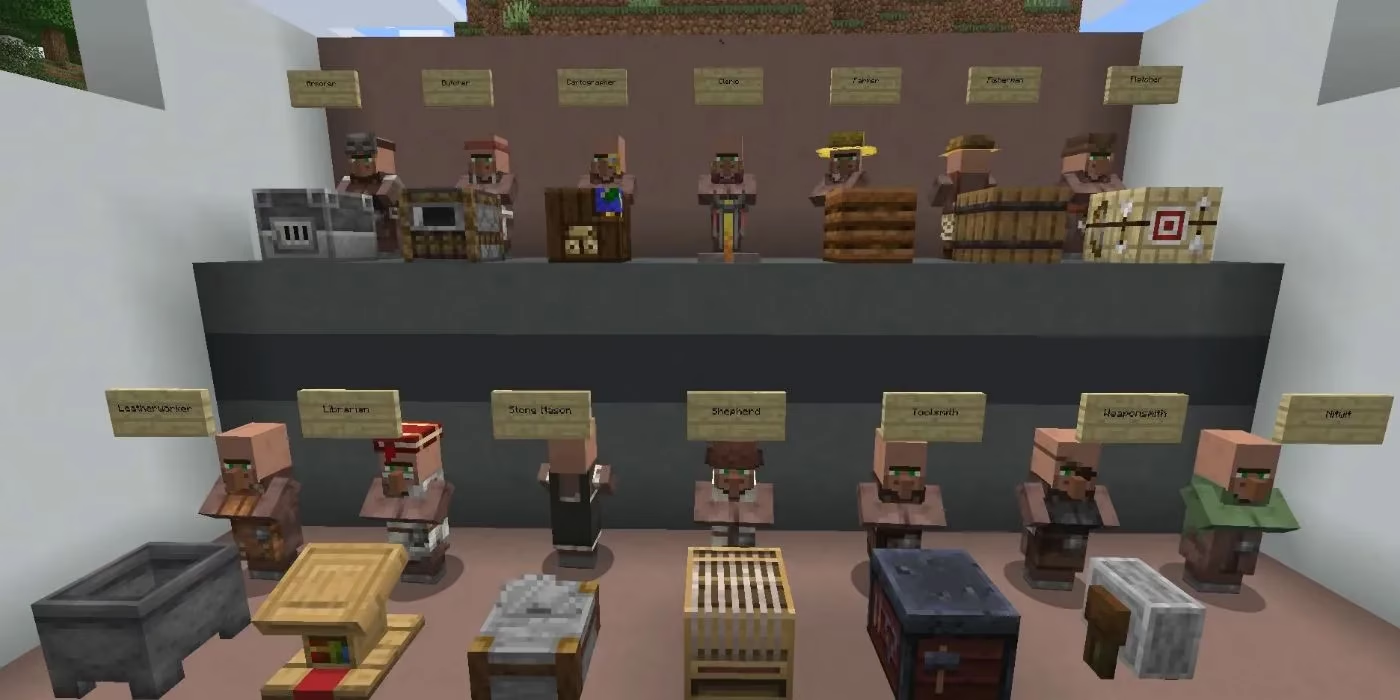
However, if one villager profession could be crowned the most powerful and versatile, it is undoubtedly the Librarian. Created with a Lectern, the Librarian's claim to fame is the sale of Enchanted Books. This isn't just about convenience; it's about accessing top-tier enchantments that might otherwise take hundreds of levels and anvils to obtain randomly. Through a process called "rerolling" trades—breaking and replacing the Lectern until the Librarian offers the desired book—players can secure game-changing enchantments like Mending, Efficiency V, or Sharpness V. This control over the enchanting process is arguably the single biggest efficiency boost in the game.
Furthermore, Librarians offer another foundational trade: they buy Paper for emeralds. While Farmers buy crops, a simple, automated Sugar Cane farm can produce paper at an astonishing rate. This creates a powerful, renewable emerald pipeline: Sugar Cane -> Paper -> Emeralds -> Enchanted Books. It effectively makes Librarians the cornerstone of both advanced gear progression and a robust economy.
In summary, mastering villagers in 2026's Minecraft is about intentional design. Players should:
-
Identify Needs: Decide if they need exploration aids (Cartographer), rare materials (Cleric), or end-game gear (Librarian).
-
Build Infrastructure: Create a controlled area with the desired job site blocks—Lecterns for Librarians, Brewing Stands for Clerics, etc.
-
Cultivate and Reroll: Bring in unemployed villagers, let them claim a profession, and check their trades. Don't like the first offer? Break the block and try again.
-
Secure the Trade: Once an ideal trade is found (like a Mending book for 10 emeralds), make sure to trade with that villager at least once to lock in their profession and prices, preventing them from changing.
By following these steps, players transform villagers from random NPCs into a curated, high-efficiency workforce. Whether you're a builder needing specific blocks, an explorer hunting treasures, or a warrior seeking the perfect sword, the right villager types, especially the mighty Librarian, are the key to unlocking Minecraft's full potential with remarkable ease.
Leave a Comment
Comments