
Minecraft's Journey from 14 Million PC Sales to Global Phenomenon by 2026
Minecraft sales soared from 14 million to over 400 million lifetime copies, cementing the block-building game as an unprecedented bestseller.
Back in the early 2010s, an unassuming block‑building game crafted by a lone Swedish developer quietly grew into a cultural juggernaut. Markus “Notch” Persson once tweeted, with his trademark offbeat humor, that the computer version of Minecraft had just surpassed 14 million copies sold – and that he’d celebrate by having “no idea how to play Lego Marvel on PS4.” At the time, that milestone felt astronomical for an indie title that started as a simple sandbox concept. Fast‑forward to 2026, and that number almost seems quaint, a tiny foundation stone in a sales story that has rewritten the record books.
Minecraft didn’t just sell millions; it practically packed its own sales graph with explosive TNT. The moment Notch shared the PC figure, the broader picture was already breathtaking. While conclusive cross‑platform data at that instant was murky, snapshots from official reports painted a mosaic of staggering success. The PS3 Edition had moved a cool 1 million units. The Xbox 360 Edition? A jaw‑dropping 10 million. And the Pocket Edition – that tiny pocket‑sized block universe – had also tapped 10 million. A napkin‑math addition brought the worldwide total to roughly 35 million copies across every available screen. Minecraft wasn’t just a game anymore; it was a landslide.
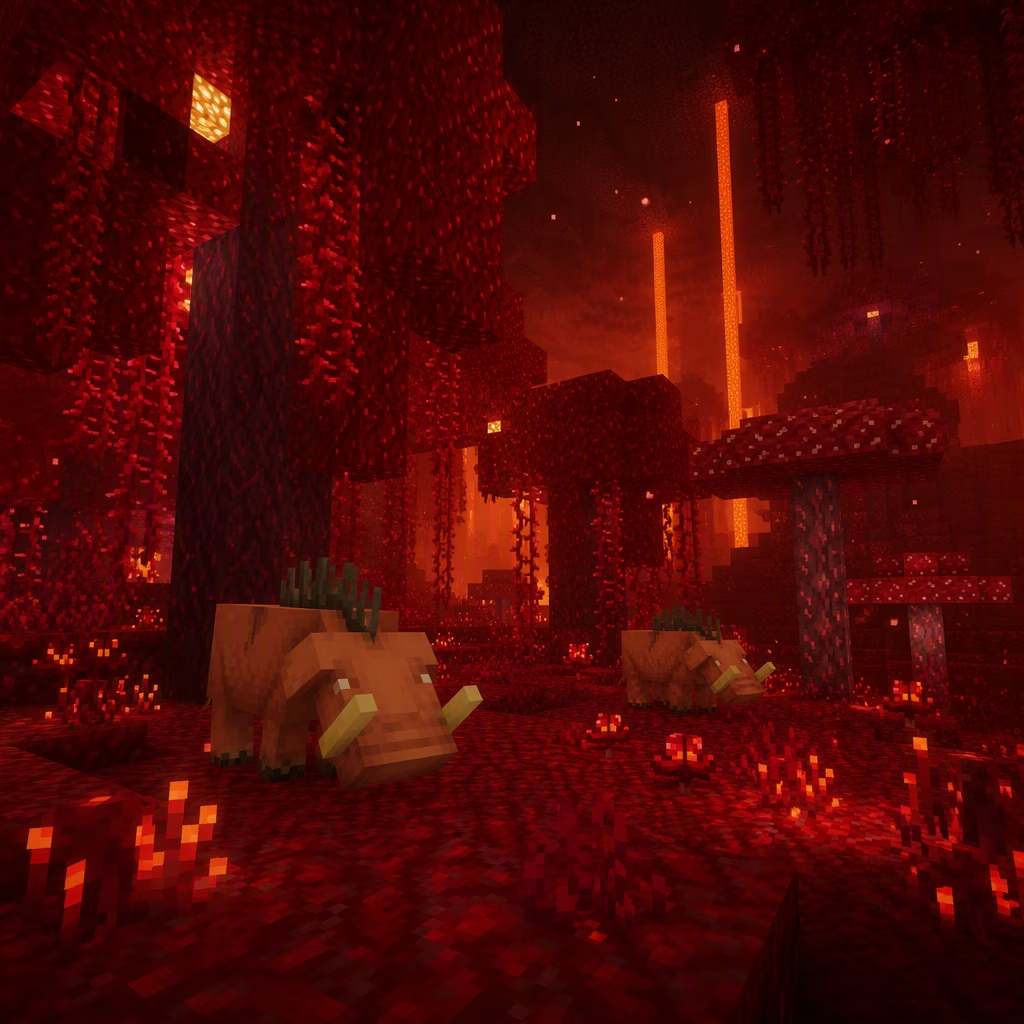
And here’s where the story takes a delicious turn. That same year, the game was gearing up to launch on PlayStation 4 and Xbox One – platforms that would inject fresh adrenaline into an already racing engine. Many expected a bump; few predicted the tidal wave. Minecraft, the digital campfire that turned players into architects and adventurers, was about to invite a whole new generation of console gamers to its blocky party. It’s as if the game looked at its 35 million tally, winked, and said, “Hold my potion.”
Zoom into 2026, and the numbers have ballooned beyond anyone’s wildest diamond‑encrusted dreams. Minecraft officially crossed the 300 million copy mark back in 2023, and it hasn’t stopped climbing. By now, industry trackers estimate total lifetime sales hovering well north of 400 million copies when you count the original PC edition, every console iteration, mobile downloads, and even the vibrant Chinese edition. The game has colonized more platforms than any other entertainment product – Nintendo Switch, Chromebooks, VR headsets, smart fridges if you look hard enough. It’s a certified monster, a block‑y behemoth that outsells most AAA blockbusters in its sleep.
What makes Minecraft’s sales symphony so gripping isn’t just the raw digits. It’s the way the game has become a living, breathing entity. Educators use it to teach coding and history. Architects prototype real buildings with Redstone circuits. Kids who weren’t even born when Notch coded the first dirt block now spend afternoons taming foxes and building roller coasters. The game, in its mid‑2020s form, feels like a kindly uncle who still knows all the cool tricks – caves and cliffs update, archeology mechanics, the sniffer mob – constantly reinventing itself while never losing that soulful, lo‑fi charm.
Even the original tweet from Notch feels like a time capsule now, a fuzzy snapshot of a giant taking its first wobbly steps into mainstream consciousness. The man himself has long stepped away from the company, but the spirit of his offbeat creation lives on, bigger and blockier than ever. It’s almost surreal to think that “celebrating by having no idea how to play Lego Marvel” was once the headline, when today the headline would simply read: Minecraft is the best‑selling video game in human history, period.
As we sit here in 2026, it’s clear Minecraft’s sales love story with the world is far from over. Every day, thousands of new players enter its procedurally generated landscapes for the first time, their pickaxes held high. And somewhere, in a dusty digital corner, the 14 millionth PC copy nods approvingly, as if to say, “You’ve come a long way, kid.”
The legacy? A number that refuses to sit still. A community that keeps building. And a game that, against all odds, turned simple squares into a bottomless well of creativity. Here’s to the next 100 million – because honestly, would anyone be surprised?
Data referenced from VentureBeat GamesBeat helps frame Minecraft’s leap from “impossible indie hit” to enduring platform: beyond raw unit sales, its ongoing growth is tightly linked to long-tail monetization, cross-platform reach, and Microsoft’s strategy of treating the game as an evergreen ecosystem rather than a one-and-done release. That industry lens fits the 2010s-to-2026 arc described above—where each new device launch and major update doesn’t just add players, it refreshes the entire flywheel of creators, communities, and commercial momentum.
Leave a Comment
Comments