
Minecraft's Wii U Debut: A Look Back at a Blocky Console Milestone
Minecraft Wii U Edition launched on Nintendo with off-TV play and bundled add-ons, sparking a creative revolution in 2015.
Back in late 2015, the gaming world was buzzing with anticipation. Mojang finally put all the rumors to bed and announced that Minecraft was marching onto the Wii U, giving Nintendo fans a true heavyweight title to sink their pickaxes into. Fast forward to 2026, and that launch feels like a pivotal chapter in Minecraft’s ever-expanding saga – a move that turned the living room into a creative workshop and laid the groundwork for the blocky empire’s total domination of every screen imaginable.
When Minecraft: Wii U Edition hit the Nintendo eShop on December 17, 2015, it wasn’t just a straight-up port. Priced at $29.99, the package came with a serious bang for the buck. Mojang bundled six of the game’s most popular add-on packs straight out of the gate, though they kept the exact lineup under wraps until launch day. To sweeten the deal, a festive mash-up pack also tagged along, perfectly timed for the holiday season. It was a smart move – players could jump straight into themed worlds without spending extra cash, and that kind of value was the cherry on top for families eyeing a new couch co-op experience.
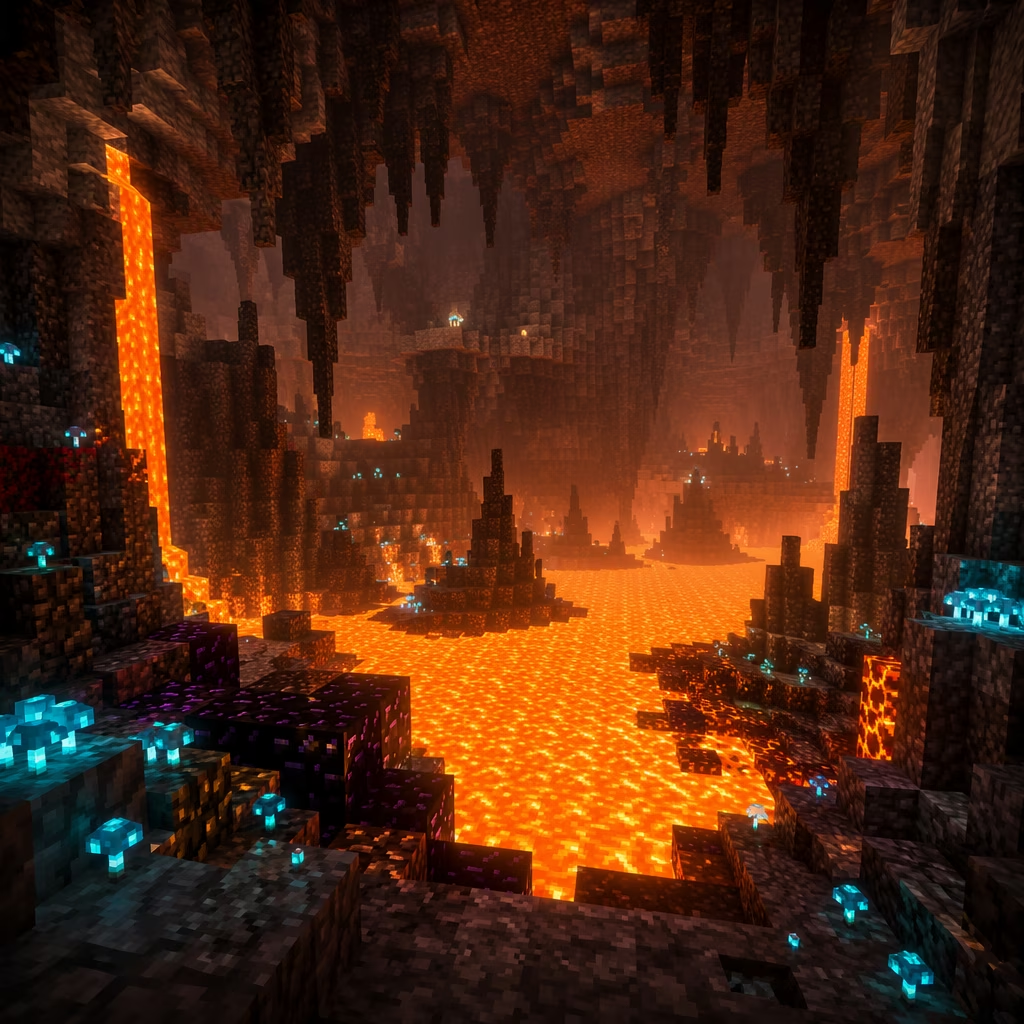
The port was entrusted to 4J Studios, the Scottish wizards behind the console and PS Vita adaptations. Those folks had already earned their stripes by bringing Minecraft to Xbox 360 and PlayStation 3, so the community knew the Wii U edition would be in safe hands. And boy, did they deliver. Beyond the initial content, 4J promised a steady stream of future content packs and regular free updates – a guarantee that kept the game feeling fresh long after its release. Players reveled in the continuous drip of new skins, textures, and mini-games, making the Wii U edition feel like a living, breathing thing rather than a set-it-and-forget-it deal.
One feature that made Nintendo loyalists sit up and take notice was off-TV play using the Wii U GamePad. The idea of crafting elaborate redstone contraptions or exploring deep cave systems while someone else hogged the big screen was a genuine game-changer. It tapped into the very spirit of the Wii U – that quirky, dual-screen magic that, in retrospect, was ahead of its time. Parents could keep an eye on the match on TV while the kids built their dream castle on the GamePad, all without a single raised voice. For a game all about collaboration and peaceful creativity, this was a match made in blocky heaven.
Now, looking at the broader picture in 2026, it’s easy to see how the Wii U edition was more than just a neat addition to a struggling console’s library. It was Minecraft’s first proper toe-dip into Nintendo’s ecosystem, and it set the stage for an absolute explosion on the Switch a few years later. The core gameplay loop – survival, creative, and the budding multiplayer scene – translated seamlessly to the GamePad’s touchscreen controls. Inventory management and crafting became tactile, intuitive processes that felt almost native to the hardware. While the Wii U itself didn’t exactly set the sales charts on fire, the Minecraft port proved that Nintendo’s audience was hungry for open-ended sandbox experiences, a lesson that would pay dividends down the road.
The game’s availability quickly ballooned beyond Wii U. By the end of 2015, players could already dive into Minecraft on PS4, Xbox One, PC, PS3, Xbox 360, and PS Vita. The Wii U version wasn’t an outlier – it was a critical piece of a multiplatform puzzle that made Minecraft a household name. Today, Minecraft stands tall on virtually everything with a screen, from smartphones to VR headsets, but the December 2015 release remains a nostalgic touchstone. It reminded the industry that a game about placing and breaking blocks could unite families, hardcore gamers, and total newcomers under one pixelated roof.
From a 2026 vantage point, the Wii U edition’s legacy is crystal clear. It proved that Minecraft’s charm doesn't rely on cutting-edge hardware – just a spark of imagination and the right tools to let players build their own fun. The regular free updates, the thoughtful inclusion of add-on packs, and the sheer joy of off-TV play all combined to create a version that still holds a special place in the hearts of those who first discovered the game on Nintendo’s dual-screen console. As we now roam vast, interconnected servers and shape worlds with ray-traced visuals, it’s worth tipping our cap to that little download on the eShop that helped a blocky phenomenon become an unstoppable cultural force.
So, whether you were a seasoned miner or a fresh-faced crafter back in 2015, the Wii U launch was a slice of gaming history that still echoes today. It proved that even the humblest block can build something magnificent – one GamePad tap at a time.
Leave a Comment
Comments