
Minecraft Story Mode's Fifth Episode Remains a Block-Built Gem
Minecraft: Story Mode's Ep. 5, 'Order Up!,' redefines choice-driven narrative by turning crafting into a moral compass.
In the vast, pixelated landscape of Minecraft, players have always found more than a game—it’s a philosophy of boundless creativity, a sandbox where imagination is the only building code. When Telltale Games took on the challenge of marrying that limitless potential with a structured narrative in Minecraft: Story Mode, many wondered if the two forces would cancel each other out, like trying to pour a roaring river into a teacup. The result was a hybrid that, across its initial episodes, sometimes wobbled like a poorly stacked block tower. But in its fifth episode, titled “Order Up!,” the series finally found its footing, delivering a chapter that still sparkles in 2026 as a masterclass in adapting open-ended source material into a charming, choice-driven adventure.
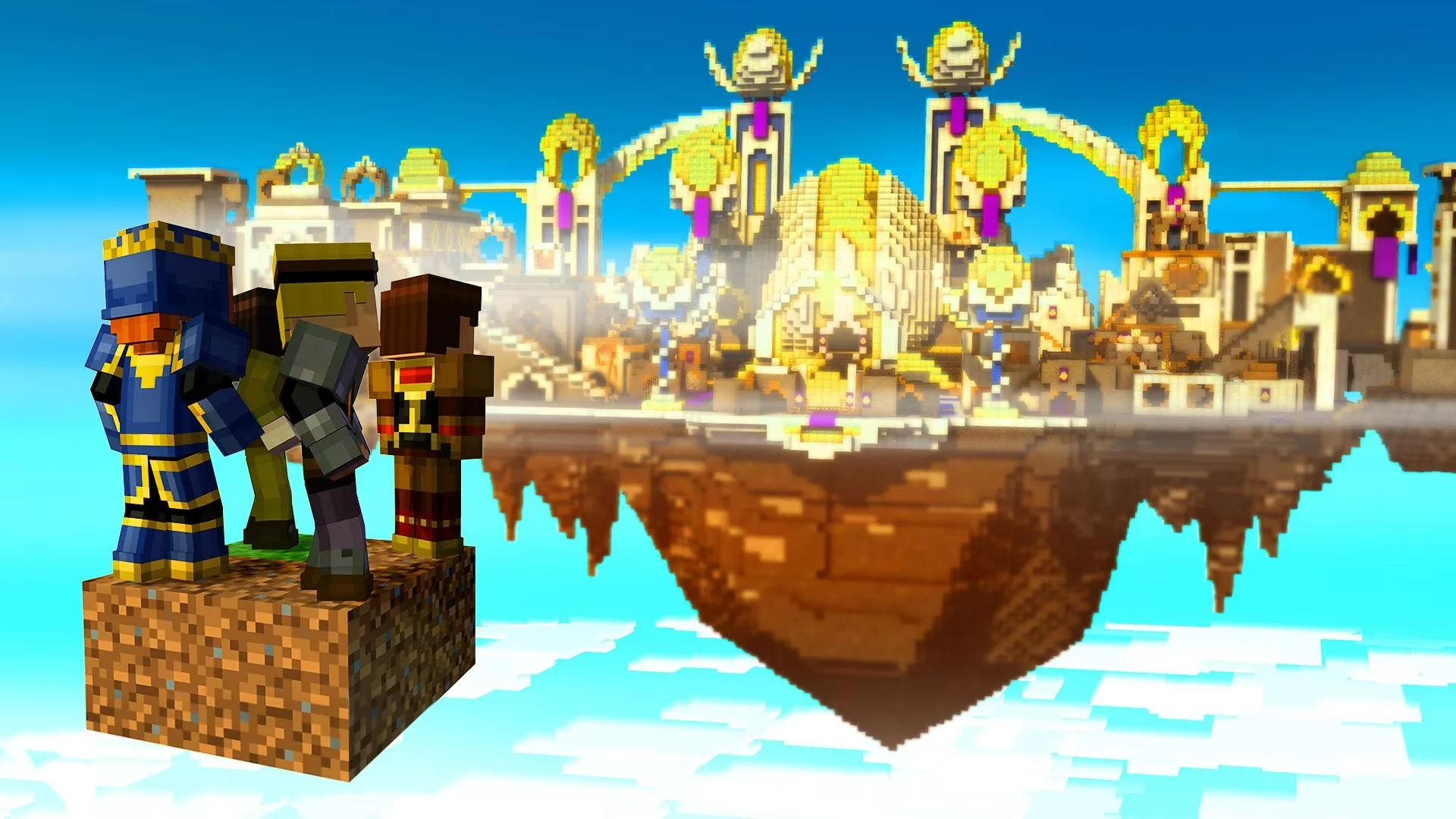
When looked at from today’s lens—ten years after its original release—Episode 5 stands as the clear turning point for Story Mode. Previous installments had coasted on an exceptionally talented voice cast, with talents like Patton Oswalt and Paul Reubens injecting vitality into their blocky avatars. That auditory warmth was always present, but the narrative often felt like a series of enchanting snapshots rather than a deeply moving album. “Order Up!” changed that by doing something deceptively simple: it placed the familiar crew of Jesse, Petra, Axel, and Olivia into a setting that made the mechanics of Minecraft itself a thematic engine.
The plot kicks off with the new Order of the Stone basking in their hard-won hero status, only to see tensions flare between Jesse and the perpetually sneering Aiden. From there, the hunt for the legendary Eversource takes the group to Sky City, a floating civilization governed by the enigmatic Founder. Here, the episode transforms crafting from a background mechanic into a moral compass. The question becomes not what you can build, but for whom you build it. This is where the narrative turns into a tightrope walk over a lava pit—every creation has a consequence, and the game makes sure the player feels the heat of those choices.
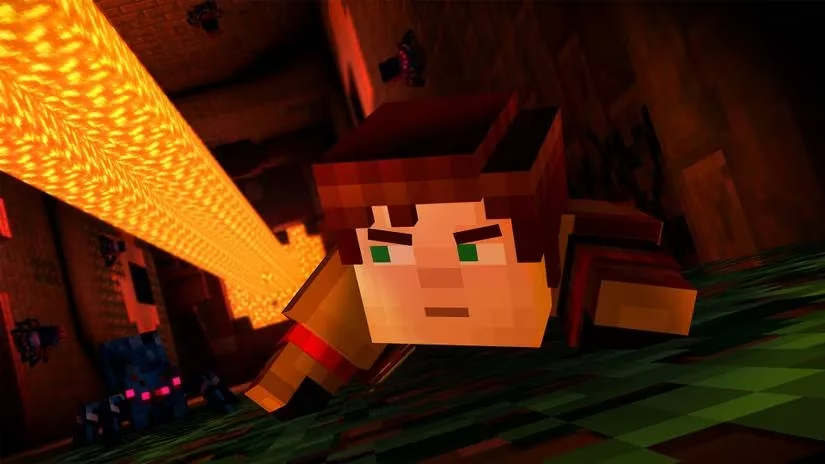
An especially memorable moment captures this tension perfectly. Series troublemaker Ivor constructs a magnificent but disastrous home made of stone and lava that sends Sky City into chaos. The player must then navigate a social minefield—side with Ivor and risk alienating the citizens the Order is sworn to protect, or condemn his creativity and strain a friendship. It’s a scenario that feels like deciding whether to keep a malfunctioning, yet beautiful, redstone contraption running in a shared server: impressive for one, destructive for many. The episode uses this conflict to explore the rift between individual expression and communal well-being without ever losing its lighthearted smirk.
Sky City itself functions as a fascinating narrative device. Under the Founder’s authoritarian rule, creativity is rationed like a scarce resource, turning the city into a top-down kingdom where every placed block is monitored. This sterile, rule-bound environment clashes violently with the free-building spirit of Minecraft, and Jesse’s arrival acts like a splash of watercolor on a monochrome canvas. Through this, Telltale cleverly critiques the very idea of restricting a world designed for infinite possibility, all while weaving in the series’ signature humor—including a delightfully unexpected reveal about the Eversource that is best left unspoiled.
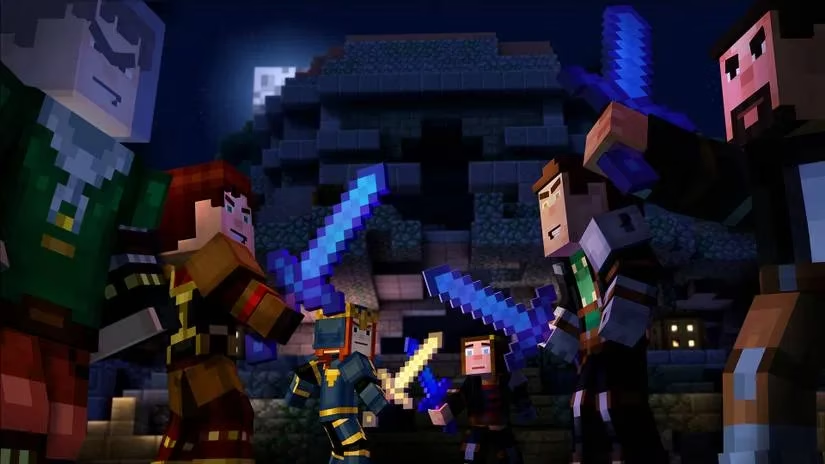
Looking back from 2026, the voice performances remain a pillar of the episode’s enduring appeal. The contrast between Ashley Johnson’s earnest Petra and Dave Fennoy’s gravelly wisdom provided an emotional anchor that the earlier episodes had only hinted at. Even so, the supporting cast outside the main circle still felt undercooked—a lingering issue that would follow the series. Yet the sheer momentum of the Sky City arc and the introduction of the Founder injected enough freshness to make “Order Up!” feel like the true start of a second season, even if it was technically still part of the first.
What makes this episode a standout is its ability to treat Minecraft not just as a visual skin, but as a storytelling language. The game’s verbs—place, break, craft—become expressions of character and conflict. For a franchise often dismissed as a mere children’s adventure, Episode 5 proved that a tale about people who build with blocks could tackle ideas of power, art, and community with surprising subtlety. Ten years on, “Order Up!” remains a shimmering example of how to extract a focused story from a universe designed to have none, and it’s a testament to the idea that even in a world of cubes, round emotions can still roll through.
Leave a Comment
Comments