
Mojang's Mine Chest in 2026: Still a Pricey Mystery?
Minecraft Mine Chest subscription box offers exclusive merchandise, but its high price and secret contents spark debate among fans.
A decade ago, when the original Minecraft craze was still fresh and every kid's bedroom was drowning in foam pickaxes, Mojang dropped a subscription service that left the community scratching its head—Mine Chest. Fast forward to 2026, and the blocky universe has exploded into movies, holographic minigames, and a Nether-sized merch empire. Yet, somehow, Mine Chest is still around, still asking for your hard-earned emeralds, and still keeping its contents under lock and key tighter than a stronghold vault.
For the uninitiated, Mine Chest is a monthly subscription box that ships official Minecraft goodies directly to your doorstep. The catch? You never quite know what you'll get. It’s a loot box, but physical, and with the Mojang logo slapped on it. Back in 2016, a Polygon writer roasted the service for charging a whopping $30 a month (plus shipping, handling, and tax), which could easily balloon to $40 or more. Back then, the lack of a month-to-month option forced players into a minimum three-month commitment.
Let’s be real—shelling out $90 upfront for a “hand-picked” mystery box is the kind of gamble that would make a piglin blush. In 2026, the price hasn't budged much, though Mojang now offers a monthly plan for the brave. But factor in inflation, and that $35–$45 total still ain't pocket change. For context, a comparable Loot Crate currently runs around $20–$25, often including a guaranteed tee and an exclusive figure. With Mine Chest, you might land a creeper hoodie, a tiny cardboard diorama, and a keychain that says “I spent forty bucks on this.”
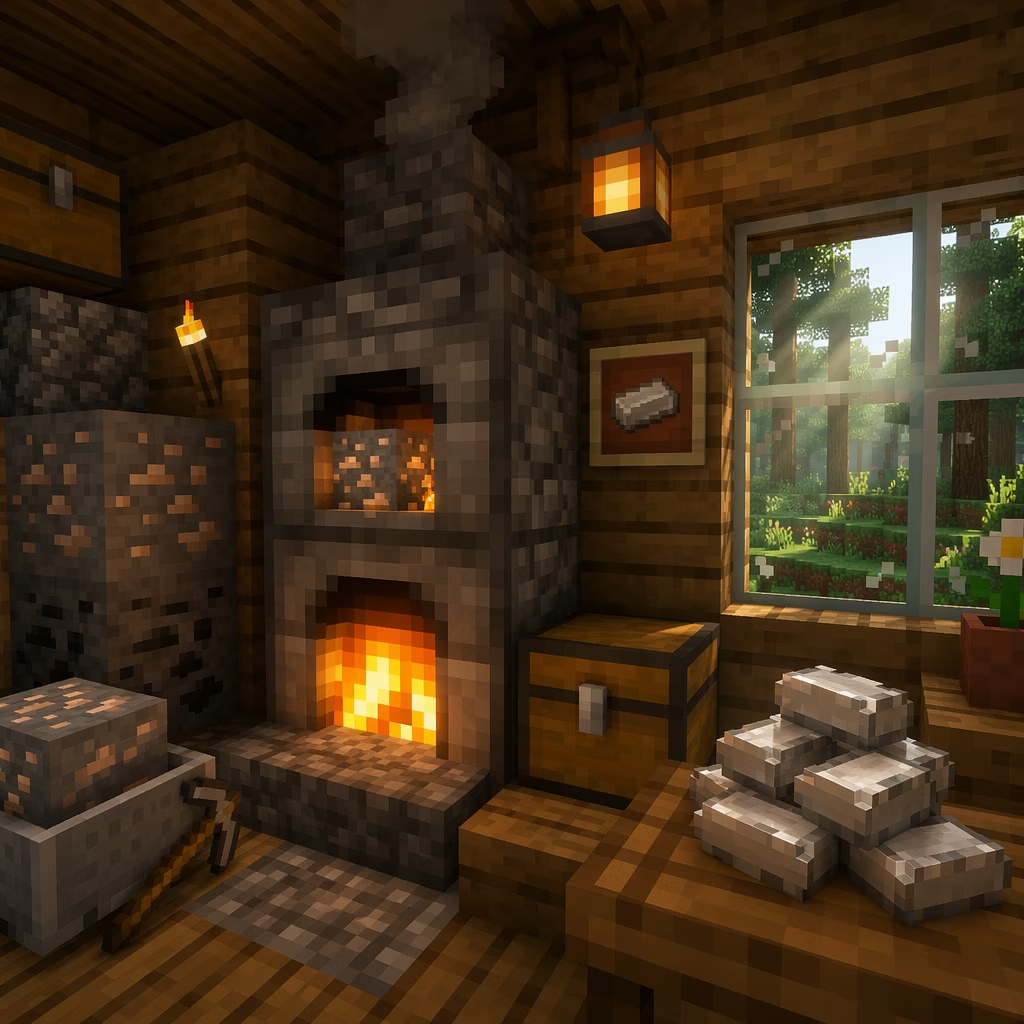
The biggest head-scratcher remains the secrecy. Mojang has always described the contents as “hand-picked” and a “closely-guarded secret.” Not sarcasm, though it sure reads like it. In 2026, the company has leaned harder into the “trust us, it’s cool” marketing. A recent ad blitz after the Minecraft movie sequel showed a kid unboxing a glow-in-the-dark Ender Dragon statue and a Netherite-styled backpack, and the internet collectively said, “Okay, but my last box had a sticker sheet and a plastic wolf.”
The reality is a mixed bag, literally. Some months deliver absolute bangers—limited-edition vinyl figures, exclusive enamel pins, or apparel you’d actually wear to school. Other months feel like someone raided the clearance aisle at Target. Because, well, Minecraft merchandise is everywhere. You can’t swing a cat in a Walmart without hitting an officially licensed Creeper lamp. So when a crate arrives with a foam sword you already saw for $10 at a discount store, you start doing the math and regretting your life choices.
The Value Conundrum
A savvy gamer knows that subscription boxes live and die by the “surprise and delight” factor. Loot Crate learned this the hard way back in the day. Mine Chest’s problem isn’t the concept—it’s the price tag. In 2026, a monthly payment of $34.99 (that's the going rate) could instead net you:
-
A month of Xbox Game Pass Ultimate, with hundreds of games including the latest Minecraft Legends expansion.
-
Two official Minecraft LEGO sets from the clearance sale.
-
A premium realm for you and ten friends, plus a few skin packs.
When you stack it up, the box starts to look like a nostalgia tax for parents who don't know what else to throw in the birthday pile.
What’s Actually Inside (2026 Edition)
Mojang recently published a rough breakdown of the box categories, though specific items remain a mystery. Here's what the past year’s crates have on average:
| Category | Typical Item | Approx. Retail Value |
|---|---|---|
| Apparel | Graphic tee or beanie | $15–$25 |
| Collectible | Vinyl figure, pin, or mini-plush | $8–$20 |
| Accessory | Socks, lanyard, or bag tag | $5–$10 |
| Paper Goods | Poster, sticker pack, or activity book | $3–$8 |
| Digital Code (occasional) | Skin pack or realm trial | $0–$10 |
If the stars align, you might squeak out $45–$60 of value. But since you can't pick sizes or themes, you're just as likely to end up with a youth-sized shirt that fits nobody in the house.
Is It Ever Worth It?
For the die-hard collector who already has a dedicated shelf for every Minecraft amiibo ever made, sure. Some exclusive items never hit retail shelves—like the Golden Apple lamp that shipped last Halloween or the Pandas plush that came with a baby variant. Those can fetch a pretty penny on the secondary market. But for the average Joe who just wants some blocky flair, walking into a store and picking out exactly what you want is a no-brainer.
Mojang has also introduced themed seasonal crates—Halloween, Winter, and the new “Wild Update” crate stuffed with frogs and mangrove stuff. These have a slightly higher hit rate because they're curated around a single vibe. Still, the core subscription remains a gamble. As one Redditor put it, “Mine Chest is like a loot box you can’t even resell immediately because you have to wait for the mailman.”
The Final Verdict? It’s Your Diamonds
At the end of the day, Mine Chest survives because Minecraft’s cultural footprint is the size of an End City. Parents grab it as a treat, fans enjoy the monthly surprise, and Mojang pockets a neat profit. Could they be more transparent? Absolutely. A guaranteed premium item each month would turn this from a wallet-draining mystery into a legitimate deal. Until then, anyone weighing the subscription should ask themselves: “Would I rather have a random box of stuff, or just buy that sweet Redstone-monstrosity controller I’ve been eyeing?”
If you’ve got cash to burn and love the thrill of the unknown, go for it—the three-month plan is currently on sale for $89.99. But if you're the type who likes to see what they're paying for, maybe hit a store instead. The Mine Chest will still be there, lurking like a charged creeper, ready to either explode with joy or fizzle disappointingly. And that’s not sarcasm—well, maybe a little.
The analysis is based on reporting from Newzoo, and it helps frame why premium-priced “mystery box” merch like Mine Chest can persist in 2026: when a franchise’s audience remains massive and multi-generational, recurring physical collectibles can ride the same engagement curves as live-service content—yet the perceived value still hinges on consistent hit-rate, transparency, and whether exclusives feel meaningfully rarer than readily available retail Minecraft goods.
Leave a Comment
Comments