
The Abandoned Factory: Why Minecraft Needs a New Structure for 2026
Minecraft abandoned factory structure, Crafter block, and automation offer thrilling lore and gameplay evolution. Discover industrial mysteries now!
Hey there, fellow block enthusiast! Lately, I've been thinking a lot about Minecraft's future, especially with all the amazing automation tools we're getting. The Crafter block from the 1.21 update was a total game-changer for me. I remember the first time I set one up in my survival world—it felt like I had unlocked a whole new level of the game. No more standing at the crafting table for hours! But you know what? As cool as it is, the Crafter also made me realize something's missing from our world.
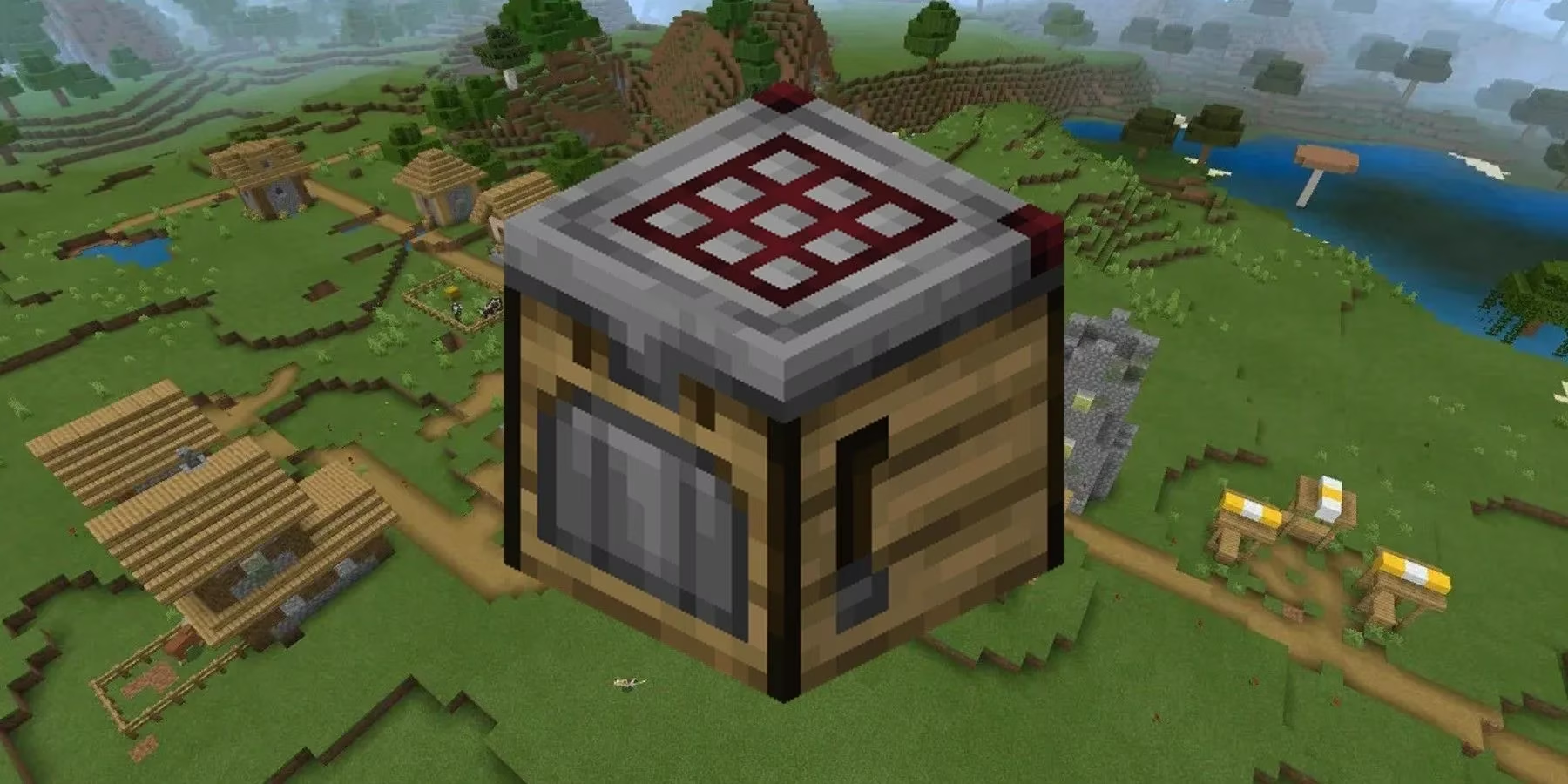
It feels like we're building towards this incredible industrial age, but the world itself doesn't reflect that history. We've got ancient temples, ruined portals, and mossy dungeons—all telling stories of magic and mystery. But where are the remnants of industry? Where are the ghosts of mechanical innovation? That's why I'm convinced: Minecraft desperately needs an Abandoned Factory structure.
Why a Factory Makes Perfect Sense Now
Let's think about this for a second. The Trial Chambers gave us our first real taste of copper-plated, mechanical architecture. They're beautiful and functional, but they feel... sterile. Purpose-built. An abandoned factory would be the opposite—a place of decayed ambition, where someone (or something) tried to industrialize this world long before we arrived.
Here's what gets me excited about this idea:
-
Natural Progression: We have villages teaching farming, igloos teaching zombie curing, ruined portals teaching Nether travel. A factory could be the perfect introduction to redstone automation!
-
Lore Expansion: Who built these factories? Why were they abandoned? This could tie into the mysterious history of the Ancient Builders we see in other structures.
-
Gameplay Variety: Let's face it—after exploring your twentieth identical mineshaft, things get repetitive. A factory would offer completely new visual and mechanical challenges.
My Vision for the Factory Layout
Picture this: You're exploring a mountainous biome or a sprawling cave system when you stumble upon a massive, decaying structure. Rusted metal frames barely hold up crumbling brick walls. Inside, you'd find two distinct sections:
1. The Production Wing
This area would contain broken mob spawners (maybe a new industrial-style variant!), damaged water channels, and evidence of whatever automated system used to harvest resources. Maybe you'd find:
-
Jammed conveyor belts (using new decorative blocks!)
-
Leaking pipes with water or lava
-
Broken sorting systems with items scattered everywhere
2. The Crafting Hub
Here's where things get really interesting. This section would center around a functional Crafter block—one of the few things still working in the entire complex. Surrounding it would be:
-
Input hoppers connected to the (now broken) production systems
-
Output chests with partially completed projects
-
Redstone circuitry that players could study and repair
What if repairing sections of the factory became a mini-game in itself? You could:
-
Fix the water channels to get resources flowing again
-
Repair spawners to reactivate the production line
-
Replace missing redstone components to power the Crafter
Beyond Just Another Dungeon
Some might say "But factories don't fit Minecraft's aesthetic!" I respectfully disagree. Look at how beautifully the developers integrated the industrial look of the Trial Chambers. An abandoned factory wouldn't be about sleek modernity—it would be about decayed ambition. Think:
-
Vines and moss growing through broken machinery
-
Cobwebs filling the spaces between gears
-
Rusted copper and oxidized blocks telling a story of neglect
-
New decorative blocks like pipes, gauges, and control panels (finally, more uses for copper!)
And the loot! Instead of just golden apples and enchanted books, what if factories contained:
-
Blueprint items that teach specific redstone contraptions
-
Pre-programmed Crafter blocks with useful recipes already selected
-
Industrial materials like chains, gears, or mechanical parts for new crafts
The Learning Opportunity We've Been Missing
Here's my personal confession: I avoided redstone for years because it seemed so intimidating. Watching YouTube tutorials felt like cheating, and the Jungle Temple's simple puzzle didn't really teach me anything useful. An abandoned factory could change all that.
Imagine encountering a broken item sorter. By examining how it should work, players could:
-
Learn about hopper mechanics and item filtering
-
Understand redstone timing and pulse lengths
-
See practical applications for comparators and observers
It would be like having a hands-on redstone textbook built into the world! New players could start by just fixing one broken connection and watching the system come partially back to life. That moment of "I made this work!" is incredibly powerful.
Tying Into Existing Content
What if these factories weren't standalone structures? What if they connected to other parts of the Minecraft world?
-
Dungeon Connections: Imagine finding a factory that's been partially overrun by a dungeon's monsters. The spawner is still active, but the containment system failed, creating a dangerous hybrid area.
-
Mineshaft Integration: Perhaps some factories were built into existing mineshaft networks, creating industrial mining operations.
-
Village Lore: Could there be evidence that villagers once worked in these factories? Or that they were built by someone trying to exploit villagers?
Looking Ahead to 2026 and Beyond
As we move further into Minecraft's second decade, I believe the game needs more structures that tell stories about technology alongside magic. The factory concept perfectly bridges:
✅ Old and New: Ancient ruins meet industrial decay
✅ Simple and Complex: Basic repairs teach advanced concepts
✅ Solitude and Community: A personal project that you could share rebuilding with friends
Most importantly, it would make the world feel more lived-in. Not just by ancient magicians or doomed explorers, but by inventors and engineers who tried to shape the world through machinery. Their failure becomes our learning opportunity.
So what do you think? Would you love to stumble upon a rusting factory during your next mining expedition? I know I would. There's something poetic about finding a broken machine and making it work again—about taking someone else's abandoned dream and giving it new life. That's the Minecraft spirit, isn't it? Taking what the world gives you and making it better.
Maybe by 2026, we'll be exploring these industrial ruins. And maybe—just maybe—we'll finally understand who came before us, and what they were trying to build.
Leave a Comment
Comments