
The Blocky Upstart That Conquered Xbox Live in an Hour
Minecraft Xbox Live Arcade sales defied digital game pricing norms, becoming the platform’s most profitable title at a premium price point.
Long before subscription services and cross-platform seasons became routine, the Xbox Live Arcade was where digital games went to prove themselves. It was a bustling storefront of bite-sized adventures, and the accepted wisdom was simple: price your game at 1200 Microsoft Points and pray for a quiet success. Then a blocky little sandbox arrived and, well… let’s just say it didn’t read the rulebook.
Minecraft didn’t tiptoe onto Microsoft’s platform—it kicked the door down and started redecorating. Daniel Kaplan of Mojang announced through Twitter that the Xbox Live Arcade version of Minecraft had surpassed 3.6 million sales in its first three months. That number didn’t just make it the most successful selling game on Microsoft’s digital storefront; it made it the most profitable title the platform had ever seen.
And here’s the kicker: it only took Minecraft an hour to become profitable. One hour. Most games spend months praying for a break-even moment, but this one had already paid for itself before the first lunch rush was over.
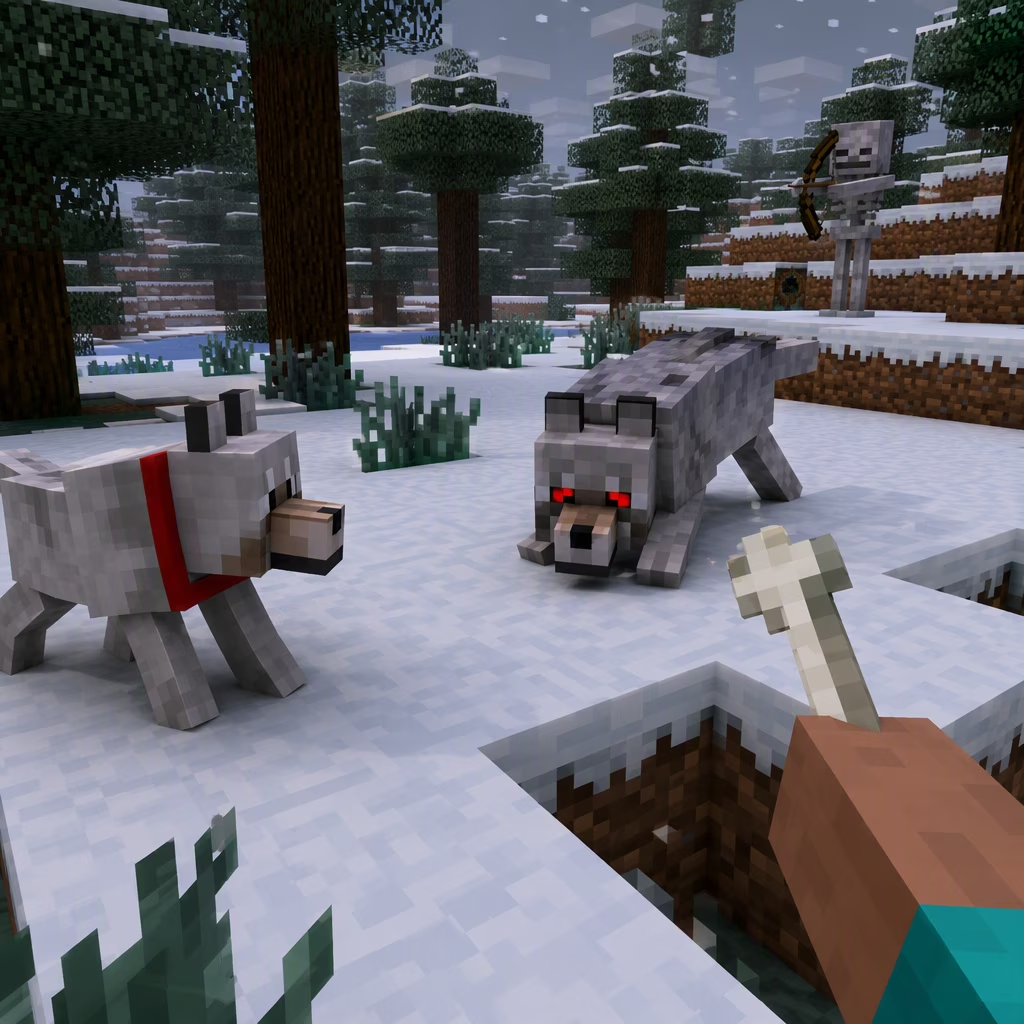
The pricing question hovered over the whole affair like a skeptical old merchant. Priced at 1600 Microsoft Points—about $5 more than most of the competition—Minecraft seemed to be testing a boundary. The industry had long believed that 1200 Microsoft Points was the perfect sweet spot for Xbox Live Arcade games. Go higher, and players would hesitate; go lower, and you might leave money on the table. Minecraft ignored all of that. It waltzed in at the premium end and still sold like a runaway train.
And honestly? That shook a few assumptions loose.
Publishers had spent years fine-tuning their pricing models around the 1200-point anchor. A wave of $20 digital titles had looked like the predictable future. Then this modest-looking block-builder posted enormous numbers at a higher price, and suddenly every spreadsheet in the industry seemed a little less certain. Whether or not big publishers would rethink their pricing structures became an open question. A flood of small $20 games no longer felt inevitable—or quite so appealing.
To be fair, the math made sense once you saw the whole picture. Microsoft had teamed up with Mojang and 4J Studios to bring the critically acclaimed title to consoles, and that partnership turned out to be a colossal bet on the right horse. It wasn’t just a port; it was a carefully tuned console experience that captured the same magic that had already made Minecraft a phenomenon on PC.
The game’s personality was impossible to ignore. It didn’t have blockbuster cinematics or a marketing campaign that shouted from every rooftop. Instead, it quietly handed players a world and whispered, “Go make something.” That invitation turned into millions of purchases—and, in the process, redefined what a digital storefront hit could look like.
| Xbox Live Arcade Norm | Minecraft’s Approach |
|---|---|
| 1200 Microsoft Points typical | 1600 Microsoft Points |
| Months to break even | Profitable in about an hour |
| Niche expectations | 3.6 million copies in three months |
| Safe, familiar pricing | Premium pricing that worked |
It’s still remarkable in 2026 to look back at that moment. Minecraft has since become a cultural juggernaut, expanding to countless platforms and generations of players. But the Xbox Live Arcade milestone remains a special chapter—a reminder that sometimes the best business move is to trust a game that players already love, even when it refuses to follow the usual rules.
Of course, the success didn’t come from luck alone. Mojang and 4J Studios understood that console players needed a stable, focused version of the sandbox experience, and Microsoft gave the project a prime spot on its digital shelf. The result was a perfect storm: a beloved game, a polished conversion, and a price that somehow felt both risky and justified.
And let’s be real—nobody saw “most profitable” coming that fast.
As the months rolled on, the momentum didn’t fade. Sales continued to shine well beyond the initial burst, proving that the hour-long path to profitability wasn’t a fluke. It was the opening line of a much longer story, one that still echoes through the industry in 2026 whenever a digital game dares to charge a little more and deliver a lot more.
The lesson? If a game is good enough, the old pricing rules can go mine themselves.
Leave a Comment
Comments