
Palworld vs. Pokémon in 2026: A Player's Honest Take on the Design Controversy
Palworld and Pokémon comparisons ignite debate over creature designs, gameplay differences, and the line between inspiration and imitation.
With Pokémon's 30th anniversary breathing down our necks in 2026, I keep thinking back to the strange, messy, wonderful argument that erupted when Palworld hit early access. I was one of those players who downloaded it expecting 'Pokémon with guns' and got something closer to a survival-crafting fever dream: cute critters, base building, resource grinding, and yes, firearms. Palworld and Pokémon are not comparable on a gameplay level—one is a turn-based monster-collecting institution, the other is an open-world survival sandbox—but their DNA keeps bumping into each other in the creature designs, and that collision has never fully gone away.
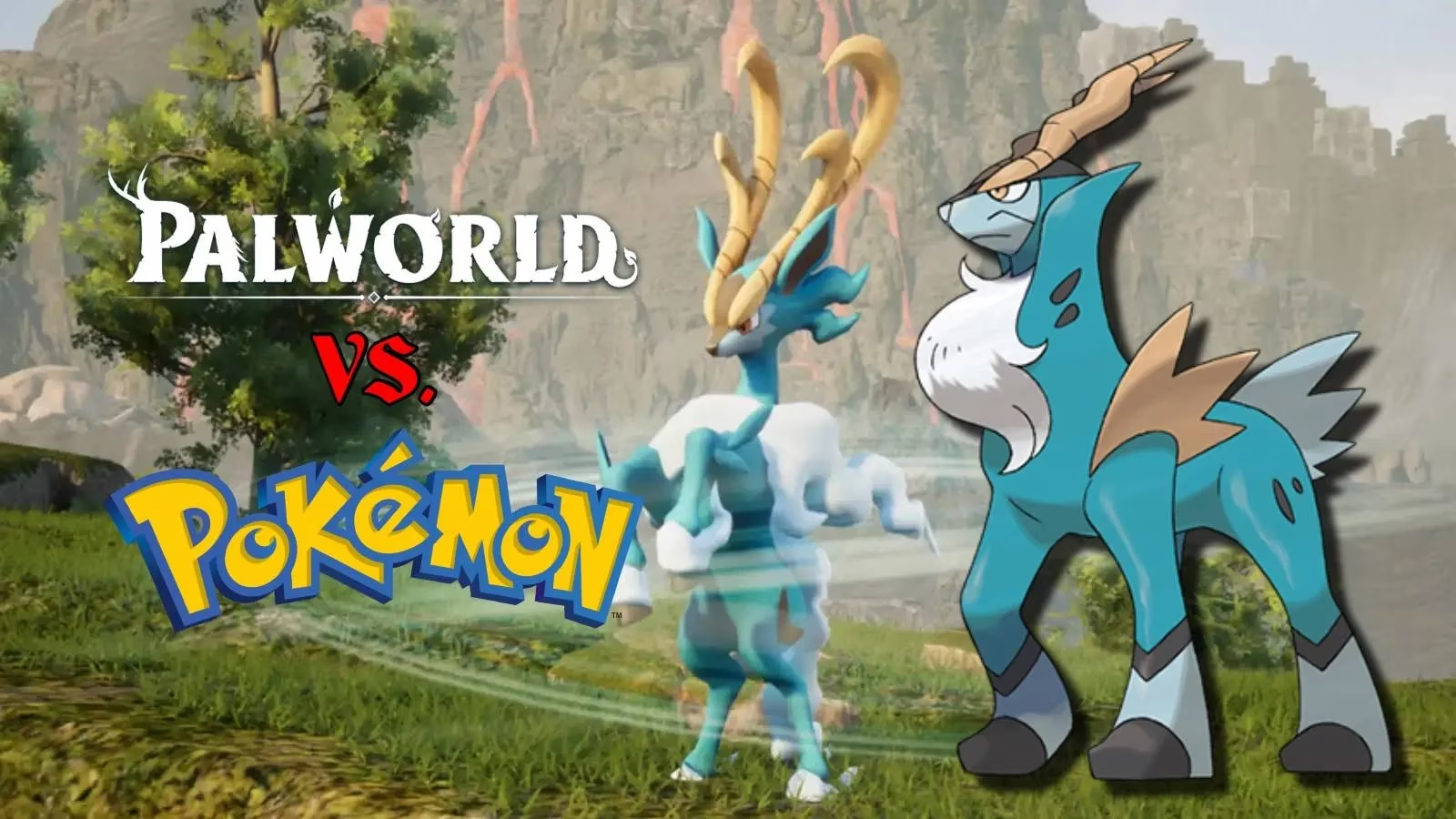
In Palworld, you catch Pals with spheres that function a lot like Poké Balls. You wander the wilds, weaken a creature, throw your capture item, and add it to your Paldeck. That loop is familiar enough to make any Pokémon veteran do a double-take. But Palworld ditches turn-based strategy entirely. Instead, you command your Pals in real time, put them to work on assembly lines, and occasionally hand them a gun. That last part is why the internet nicknamed it 'Pokémon with guns' in the first place, and Pocket Pair eventually released a statement saying it had just become aware of the nickname and never meant to share anything with Pokémon games.
Still, the design comparisons are where things get spicy. When Palworld first started marketing its early access release, Pokémon fans began noticing uncanny resemblances between existing pocket monsters and the new Pals. Once the game was out and most of the Paldeck was available, those similarities piled up like laundry in a dorm room. Some fans called for boycotts. Others shrugged and said monster-collecting games have always borrowed from each other. I fall somewhere in the middle, because the truth is that some Pals look like one-to-one copies, while others look like two Pokémon fused together in a teleportation pod and came out holding hands.
Here are the biggest comparisons that fans keep bringing up:
| Palworld Pal | Pokémon comparison | What fans notice |
|---|---|---|
| Verdash | Cinderace | Multiple design elements seem to line up, especially the athletic, rabbit-like silhouette and facial structure. |
| Jetragon | Latios and Latias | A jet-like dragon that looks like a fusion of the Gen 3 Eon Pokémon, right down to the sleek, aerodynamic theme. |
| Depresso | Espurr | Eerily similar ears, body shape, and that thousand-yard stare. |
| Dinossom | Meganium and Ivysaur | Shares the same design philosophy: a gentle dinosaur-like creature with plant features. |
Trying to prove inspiration versus plagiarism here is like tracing a river back to a single raindrop—you can do it, but you'll get wet and look silly doing it. Pokémon itself has evolved over nearly three decades, and its creature designs have absorbed influences from animals, myths, toys, and anime. Palworld's Pals sometimes land like a karaoke cover that hits every note but changes the lyrics just enough to avoid copyright. Sometimes that works. Sometimes it feels like a funhouse mirror that studied taxonomy and decided to remix the final exam.
As a player in 2026, I can say that Palworld has grown beyond its shock-value nickname. The game has had updates, new Pals, and a community that cares about base efficiency as much as it cares about cuteness. But the Pokémon comparisons haven't vanished. If anything, Pokémon's 30th anniversary makes the contrast sharper. Pokémon is a legacy brand with theme parks, trading cards, and generations of nostalgia. Palworld is a scrappy survival game that came out swinging and refused to apologize for its influences.
Pocket Pair's statement said it didn't mean to share anything with Pokémon games. I believe that on some level. I also believe that artists are sponges, and when you spend years absorbing a genre, certain shapes become muscle memory. The controversy isn't really about whether one game copied another. It's about how we decide where homage ends and theft begins. That line is not a wall; it's a tide. It moves depending on who's looking and what they love.
So in 2026, I'm not boycotting Palworld, and I'm not pretending the similarities don't exist. I'm just playing both games, catching creatures in different ways, and appreciating that competition can push a genre forward—even when the courtroom of public opinion never quite adjourns.
Would I like Palworld to develop a more distinct visual identity? Absolutely. Would I like Pokémon to take more risks with its creature designs and gameplay? Also yes. The best outcome isn't a lawsuit or a boycott. It's two monster-collecting giants learning from each other without losing what makes them weird. And if one of them hands a sheep a rocket launcher along the way, well, that's just 2026 for you. 🐑🚀
Data referenced from SteamDB helps frame why Palworld’s “controversy + curiosity” launch cycle mattered: early-access survival games often live or die by sustained player activity, update cadence, and marketplace momentum rather than one-off comparisons to legacy franchises. Looking at how players typically swarm, stabilize, or taper off around major patches underscores the blog’s point that Palworld has increasingly been judged on its own loop—base-building, real-time Pal management, and sandbox progression—even as the creature-design debate keeps resurfacing whenever new Pals arrive.
Leave a Comment
Comments